DELIVERY
What was scheduled?
Review the booked faces, flight dates, creative versions and product rotation. Ask which delivery records are available for the buy.
 Let’s talk
Traffic, impressions and digital plays answer different questions. Use the definitions behind the media kit figures.
An estimate of vehicles passing a road segment during a stated period. It is a route volume, not a count of people who saw a particular ad.
An audience exposure estimate whose methodology should account for the display, viewing opportunity and schedule. Ask which definition and source are used.
One appearance in a screen’s content rotation. Play counts and hold time describe delivery; neither alone establishes the number of people reached.
The Book Your Billboard PDFs show weekly traffic and flight impression figures for individual locations. Their footer says traffic counts come from Public Works and SDDOT and that the data is deemed reliable but not guaranteed. Ask for the date, method and assumptions behind a figure before using it in a cross-market forecast.
For digital, the flight, hold time, network rotation and share of voice affect the delivery story. For static, the location and contracted posting period matter. Reach and frequency need an explicit audience model; they should not be inferred by multiplying traffic and days.
Further reading: OAAA glossary of OOH terms and OOH measurement overview.
Reach describes the portion of an audience exposed during a campaign; frequency describes average repeated exposure among the people reached. Both require an audience model and a stated period. They cannot be read directly from the number of screens in a buy.
Geopath’s glossary explains audience concepts used across outdoor media. BYB’s supplied site sheets use their own stated sources; a link to the glossary does not mean BYB inventory has been audited or rated by Geopath.
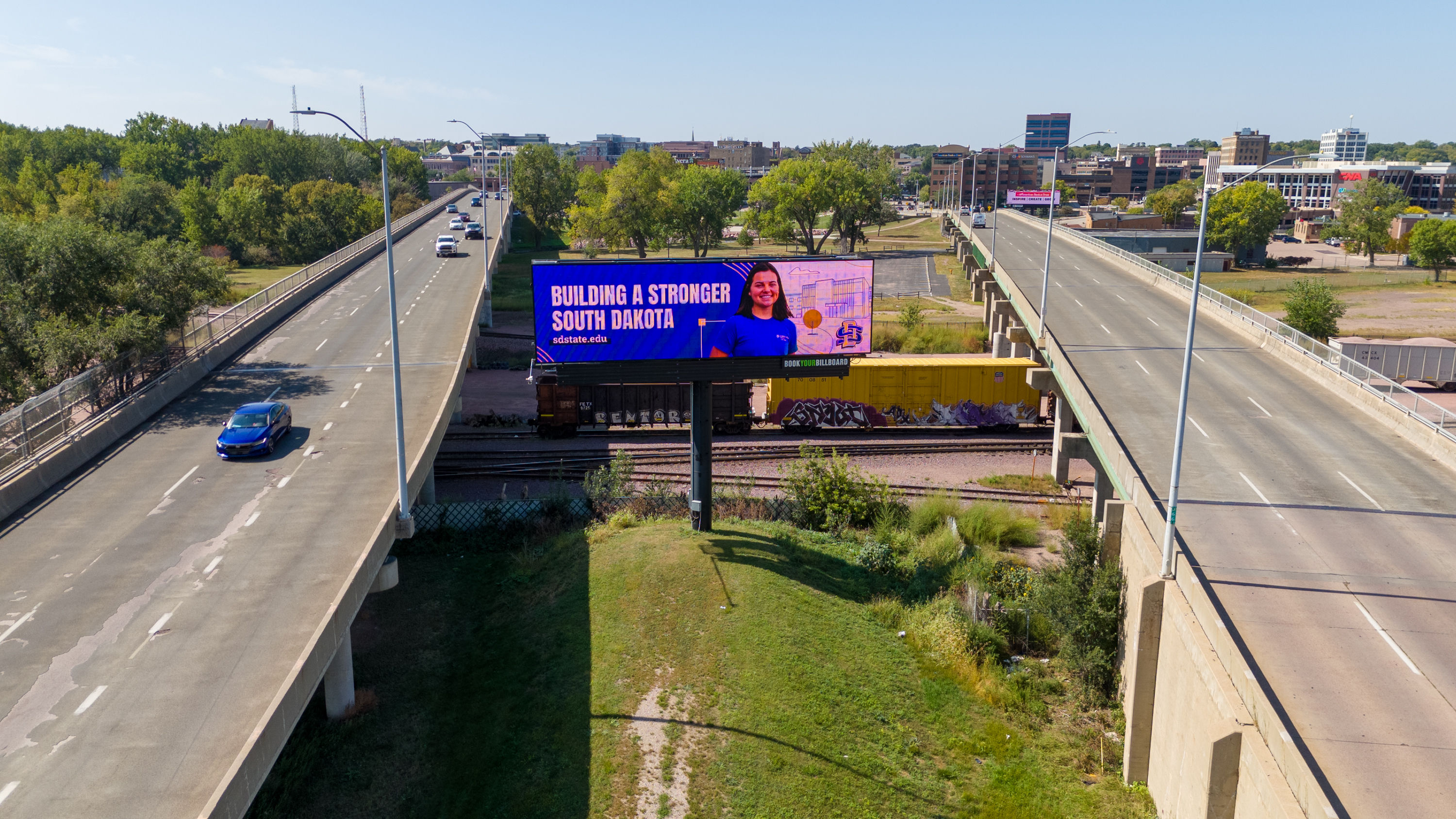
Viaduct Network billboard location
The comparison desk
Keep these questions separate when you review a campaign. A delivery figure and an audience estimate describe different parts of the story.
DELIVERY
Review the booked faces, flight dates, creative versions and product rotation. Ask which delivery records are available for the buy.
AUDIENCE
Request the audience source, definition, reporting period and assumptions. Confirm whether a figure is traffic, impressions or modeled reach.
BUSINESS RESPONSE
Keep response measures such as site visits or inquiries alongside the campaign dates. They can inform the review; they do not alone establish what caused a change.
BRING THESE QUESTIONS TO THE PROPOSAL
What period does this figure cover? Which faces are included? What is the source date? How does the digital schedule enter the calculation? Can the comparison use the same definition and period?
We can explain the sources and assumptions used for your proposed locations.