CHECK THE READ
A pin has two sides.
A nearby billboard does not automatically face the approach you need. Open the face details before giving the artwork a turn or exit instruction.
 Let’s talk
Translate a media brief into markets, locations, formats, creative requirements and a realistic flight.
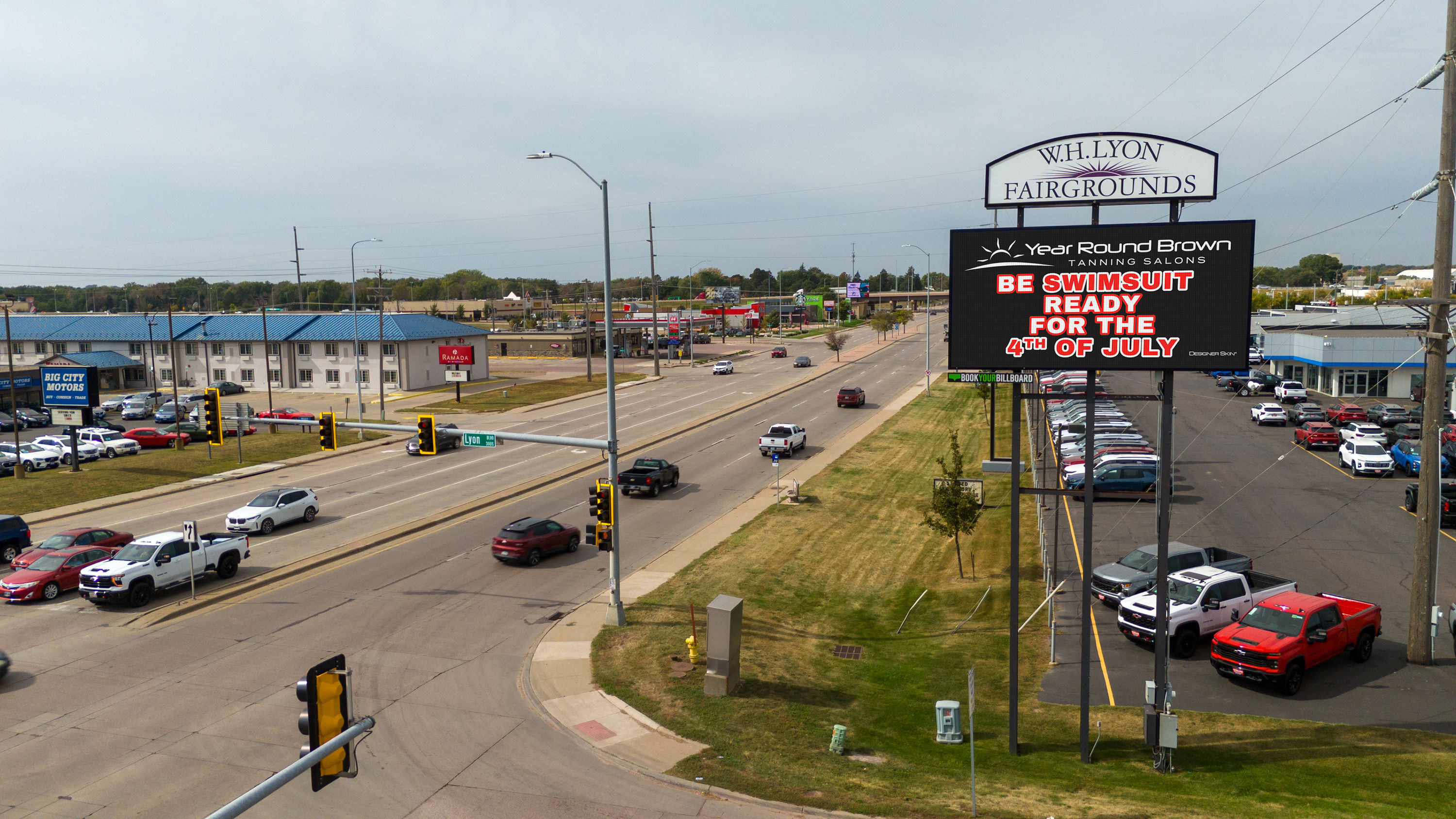
Start with a real place
The road, the read and the reason to be there.
Decide whether the campaign needs broad awareness, a market entrance, a retail route or a sustained presence near a destination.
Compare Sioux Falls streets, the interstate loop and regional markets. Review directions of travel and the face-level map.
Choose digital network coverage, a focused digital face, static presence or a combination. Check each product’s hold and format.
List every aspect ratio and location that needs artwork before the production deadline. A network with mixed screen sizes may need two files. If a campaign uses local copy, create a clear naming scheme for every market and face.
The media kits describe product-specific holds and sample flights. Confirm current availability, play order, placement choices, rates and artwork deadlines in the proposal; do not infer them from a site photo alone.
A traffic count, an estimated impression and a play are different measures. Ask for the methodology, period and assumptions behind any audience figure so the buy can be compared fairly with other media.
The planning notebook
Write a short answer for each decision. The aim is a brief the media team and creative team can both act on.
01
Write the campaign’s main job in one sentence. “Introduce our new clinic” is a clearer starting point than a list of unrelated services and promotions.
02
Name the business destination and the communities you serve. Save the relevant face IDs from the map, including direction of travel for any location-specific message.
03
List preferred dates and any opening, event or offer deadline. Include later creative changes so availability and production can be discussed together.
04
Confirm all booked formats, then assign each approved version to its market or face. Include brand files, the landing page and who signs off the artwork.
05
Choose the campaign question in advance. Keep agreed delivery details, the audience methodology and any business response measures separate so each answers its own question.
Keep the answers together, then use the campaign brief tool to prepare a note for BYB.
CHECK THE READ
A nearby billboard does not automatically face the approach you need. Open the face details before giving the artwork a turn or exit instruction.
CHECK THE PROPORTIONS
Stretching a wide design onto a vertical face changes the hierarchy. Adapt the composition and review each final size.
CHECK THE DATES
Discuss artwork approval and production deadlines before the offer starts. A requested flight becomes concrete when availability and terms are confirmed.
Markets, dates, objective and creative are enough for us to start a proposal.